Space exploration has long captivated the human imagination, with the prospect of uncovering the mysteries of the cosmos driving technological and scientific advancements. Central to these advancements is the pivotal role played by robotics. From traversing alien landscapes to conducting detailed atmospheric analyses, robots are at the forefront of exploring the final frontier, achieving feats that are currently beyond human capabilities.
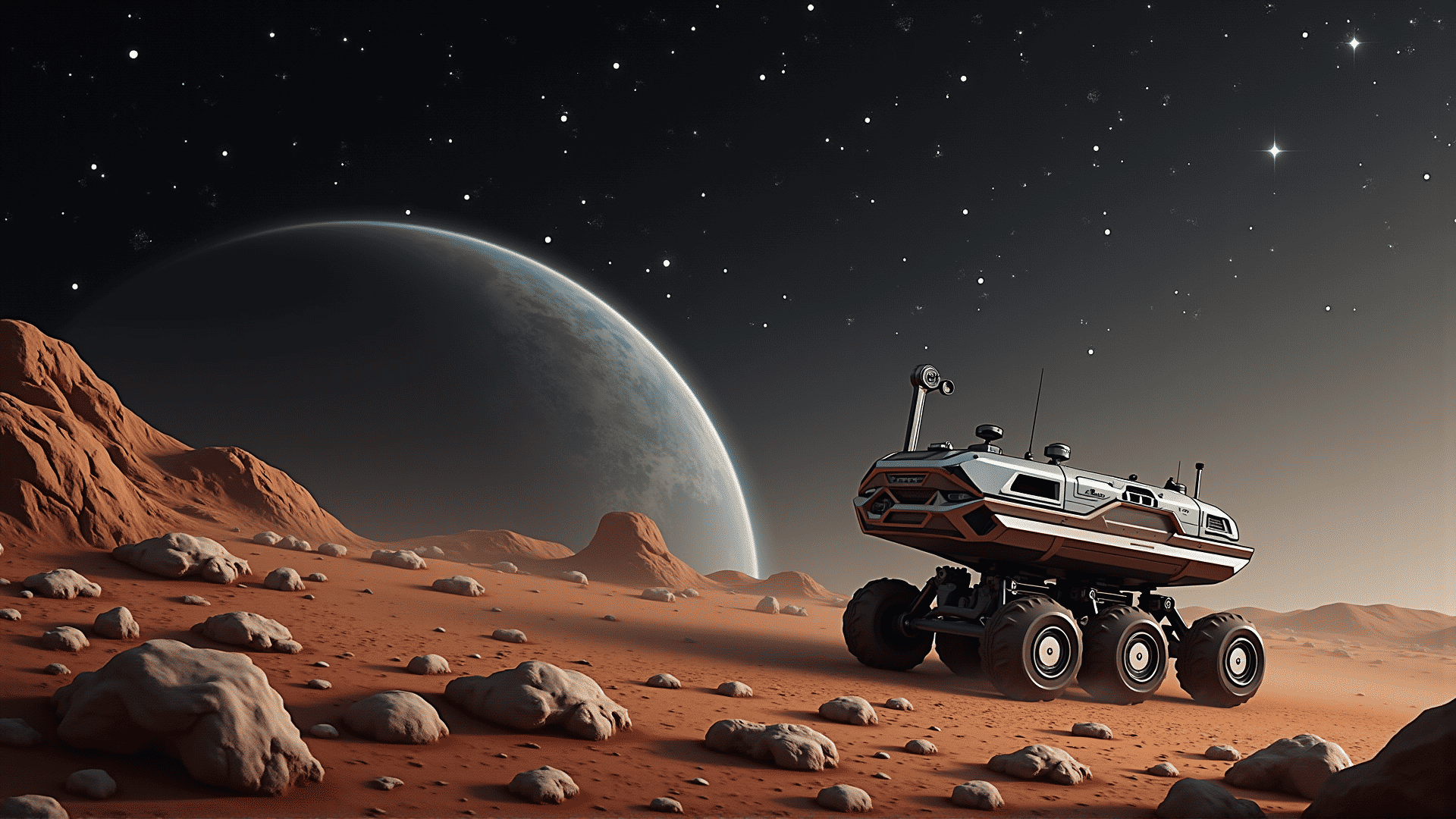
One of the most prominent examples of robotics in space exploration is the deployment of rovers. Since the mid-20th century, space agencies have been sending robotic rovers to explore planetary surfaces, with Mars being a primary focus. These machines, such as NASA's Curiosity and Perseverance rovers, are equipped with a suite of scientific instruments designed to study the geology, climate, and potential habitability of the Red Planet. These rovers can travel across challenging terrains, drilling into the surface to collect samples and analyze them with onboard laboratories. Equipped with cameras and sensors, they provide detailed imagery and data back to Earth, offering unprecedented insights into our neighboring planet's history and conditions.
Beyond mere exploration, robots extend humanity's reach to locations that are inhospitable for human life due to extreme temperatures, high radiation levels, or other hazardous conditions. The lunar and Martian surfaces are prime examples where radioactivity and temperature fluctuations pose significant risks to human crews. Here, robots can venture where humans cannot yet safely go, setting the stage for future manned missions by paving the way and gathering essential data about the environment.
Meanwhile, autonomous drones are revolutionizing how space exploration missions are conducted. These drones, often designed to fly in thin atmospheres or hover in zero-gravity environments, offer flexibility and access to otherwise unreachable areas. Helicopter-like drones such as NASA's Ingenuity, which accompanies the Perseverance rover on Mars, have demonstrated the feasibility of powered flight on another planet, marking a milestone in space robotics. By scouting terrain ahead of rovers or mapping geological features, these drones enhance the efficiency and success rate of exploration missions.
Robotics in space exploration is also instrumental in satellite deployment, servicing, and repair. Robots play crucial roles in assembling complex structures like the International Space Station (ISS) and conducting maintenance tasks during spacewalks, ensuring the longevity and continued functionality of these expensive and sophisticated systems.
The development of artificial intelligence (AI) has further enhanced the capabilities of robots, allowing for increased autonomy in decision-making processes. This is particularly useful given the communication delays between Earth and distant locations like Mars, where real-time human control is not feasible. AI-driven robots can analyze data and make prompt decisions, speeding up mission processes and responding adaptively to unforeseen challenges or changes in the environment.
As humanity continues to push the boundaries of space exploration, robotics will undoubtedly remain an essential component, driving success across interplanetary missions. By taking on challenging and dangerous tasks, robots are partners in discovering new frontiers, laying the foundation for humans to one day follow. As technology evolves, so too will the capabilities and roles of these mechanical explorers, ensuring that our quest to understand the universe is both bold and sustainable.